Age-Appropriate Chores for Toddlers (Ages 2–4)
- Jacob Volk
- Chores & Routines
- 22 Jan, 2026
Toddlers want to help. They just don’t want to help the way adults expect.
If you have ever handed a toddler a task and immediately regretted it, you are not alone. At ages two to four, kids are eager to participate but lack the coordination, attention span, and patience to do things “correctly.”
That does not mean chores are a bad idea at this age. It means the goal needs to be participation, not results.
This guide explains what age-appropriate chores look like for toddlers, how to introduce them without frustration, and how to lay the foundation for responsibility that grows over time.
What chores mean for toddlers
For toddlers, chores are not about productivity. They are about belonging.
Toddlers help because they want to feel included in what adults are doing. When they are invited to participate, they learn that contributing is part of everyday life, not something reserved for later.
At this age, chores should:
- Be simple and concrete
- Take only a few minutes
- Have no expectation of perfection
When parents expect toddler chores to look finished or efficient, everyone gets frustrated. When the focus stays on involvement, toddlers stay engaged.
Why starting chores early actually helps later
Introducing chores during the toddler years makes future routines easier, not harder.
Kids who grow up helping in small ways often see responsibility as normal. Kids who are excluded from chores early often resist them later because they feel sudden and unfair.
Early chores help toddlers:
- Practice following simple instructions
- Build confidence through participation
- Learn that everyone contributes
These early experiences shape how kids view responsibility long before chores become more complex.
Examples of age-appropriate chores for toddlers
Toddler chores should be simple actions with a clear beginning and end. Many of these tasks will still require supervision, and that is expected.
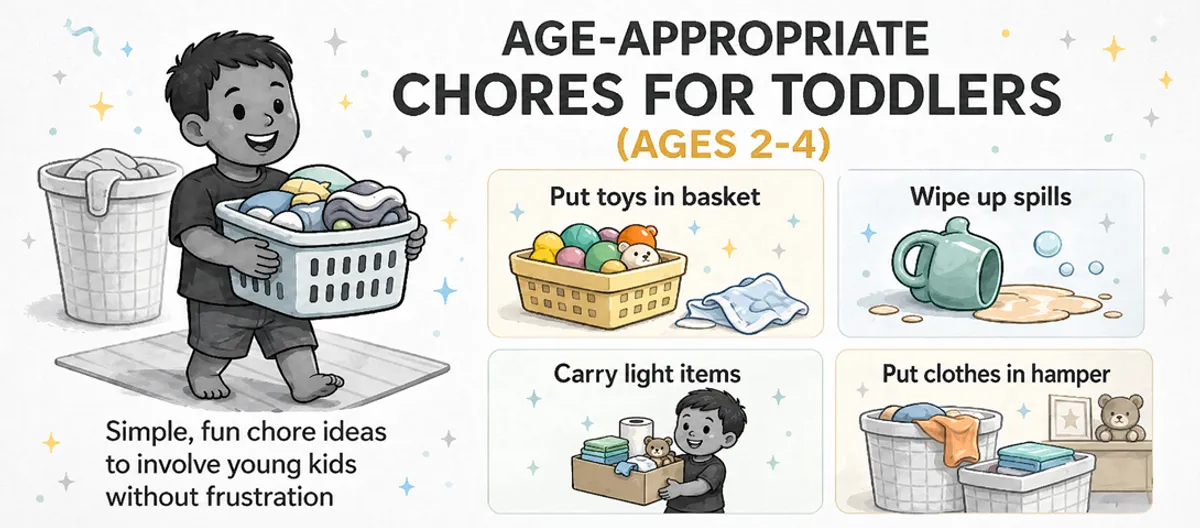
Common age-appropriate chores include:
- Putting toys into bins or baskets
- Placing clothes into a laundry hamper
- Wiping up small spills with a cloth
- Carrying lightweight items
- Helping put groceries on low shelves
The task matters less than the routine. Repeating the same small chores builds familiarity and confidence.
What to expect when toddlers help
Helping will be slow. Helping will be messy. Helping will often create more work for you.
That is normal.
Toddlers are still learning how their bodies work. They need repetition and patience, not correction. Fixing everything immediately or constantly stepping in teaches toddlers that their effort is not useful.
If safety is not an issue, let them try. The learning happens in the process.
How to introduce chores without frustration
The easiest way to introduce toddler chores is to do them together.
Narrate what you are doing, invite your child to help, and keep the task short. Avoid asking questions that invite refusal. Instead of asking, “Do you want to help clean up?” try “Let’s put the toys in the bin together.”
Praise effort rather than outcome. Simple acknowledgments like “You helped” or “Thank you for putting that away” reinforce participation without pressure.
Some families also use simple, age-appropriate rewards for toddlers to reinforce early routines, especially when chores are new or consistency is still developing.
How many chores should a toddler have?
For toddlers, fewer is better.
One or two predictable chores done daily is plenty. Repeating the same tasks helps toddlers understand expectations and reduces confusion.
Rotating chores or introducing new ones too often can feel overwhelming at this age. Consistency builds comfort.
When toddler chores go wrong
If your toddler consistently resists chores, it is usually a sign that the task is too complex, too long, or poorly timed.
Try simplifying the task, shortening the duration, or shifting it to a calmer moment of the day. Toddlers do best when chores are woven naturally into routines rather than introduced during transitions or meltdowns.
Looking ahead to the next stage
As toddlers grow into preschoolers and elementary-age kids, chores gradually shift from helping to completing tasks independently.
Starting with simple, low-pressure responsibilities now makes that transition much smoother later. The goal is not to raise a perfect helper at age three. It is to raise a child who sees responsibility as normal.
For a broader overview of how chores evolve by age, see the full guide:
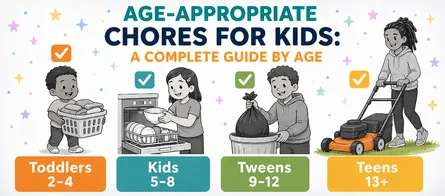
Age-Appropriate Chores for Kids: A Complete Guide by Age
Frequently Asked Questions
Yes. Toddlers can participate in chores when tasks are simple and expectations are realistic. At this age, chores are about helping and learning, not completing tasks perfectly.
Many families begin introducing simple chores around age two. Starting early helps kids see responsibility as part of everyday life rather than something added later.
Rewards are not necessary for toddler chores. Praise, inclusion, and repetition are usually enough. At this age, the experience of helping is often its own motivation.
Refusal often means the task is too hard, too long, or poorly timed. Simplifying the chore and doing it together usually helps reduce resistance.
No. Messy results are expected and part of learning. If safety is not an issue, allowing toddlers to try builds confidence and familiarity with responsibility.

Ready to try MyChoreBoard with your kids?
Install on any phone, tablet or computer. Free with no sign-in hoops.